Memory Keepsakes for Deceased Loved Ones: What to Keep and How to Hold On
 By Pham PhamNovember 08, 2026
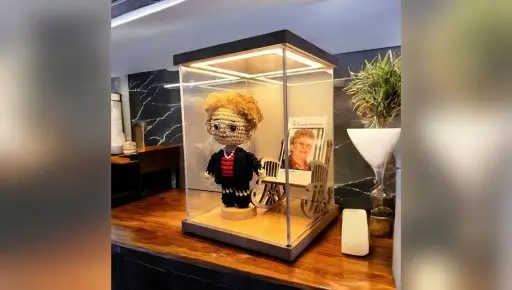
Table of contents
You find their reading glasses in a coat pocket, or a grocery list in their handwriting, and suddenly you're sitting on the floor holding it. Small things can carry a whole person.
Memory keepsakes for deceased loved ones are objects that keep someone close after they're gone: things they owned, things in their handwriting or voice, likenesses made from their photos, and boxes that hold it all. The right keepsake is the one that feels like them when you hold it, not the most expensive one.
1. What are memory keepsakes, and why do they matter so much?
Memory keepsakes are the objects we keep because they connect us to someone we've lost. A sweater, a recipe card, a watch that still ticks, a voicemail you can't delete. They matter because grief is not only in the mind. It's in the hands, the nose, the ears.
People who write about grief sometimes call these "linking objects." Headspace's guide to grief mementos explains that physical reminders can help you acknowledge a loss and feel connected to the person, and that touch and smell are some of the strongest paths back to a memory. That's why a scarf can undo you faster than a photo.
If you've been holding on to things and wondering whether that's okay, it is. Keeping their things isn't a failure to move forward. It's one of the oldest ways people have of carrying someone with them.
2. What kinds of memory keepsakes are there?
Most memory keepsakes fall into six kinds: things they owned, things that hold their words or voice, things you can wear, likenesses of them, places to gather it all, and living reminders. Here's how they compare.
- Things they owned: a watch, a cardigan, reading glasses or a favorite mug. They hold their touch and their daily life. They are often shared among family, and can be fragile.
- Their words and voice: recipe cards, letters, birthday cards, voicemails and videos. They hold how they spoke and what they cared about. Back up recordings in more than one place.
- Things you can wear: a ring or pendant engraved with their name, their handwriting or their fingerprint, or a small locket that holds a little of their ashes. They give you something of them to carry through the day. A fingerprint has to be taken early, so ask the funeral home before the burial or cremation.
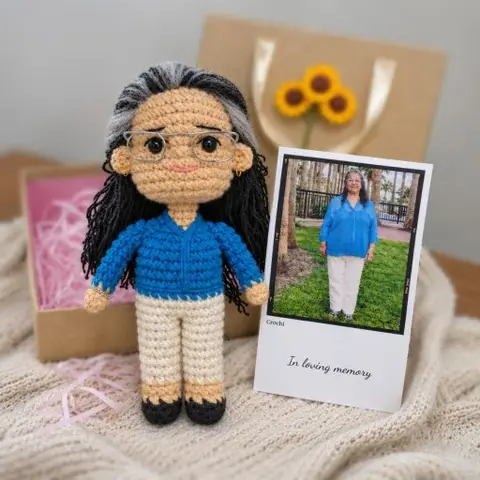
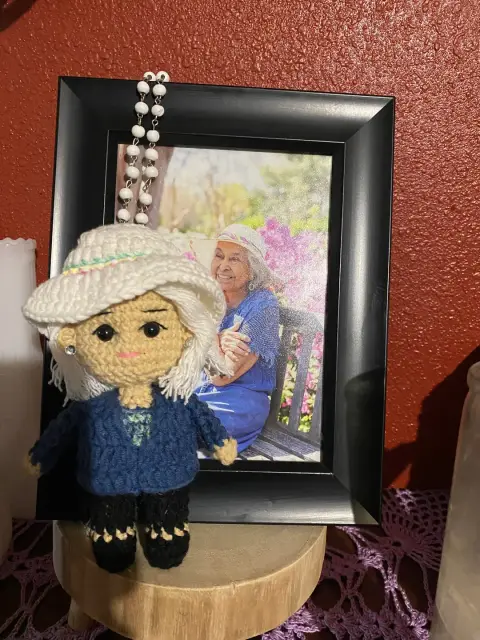
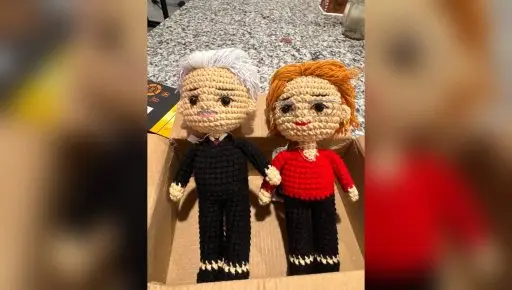
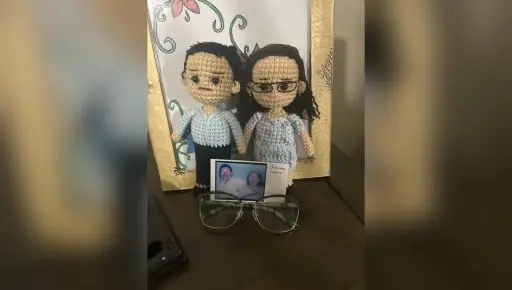
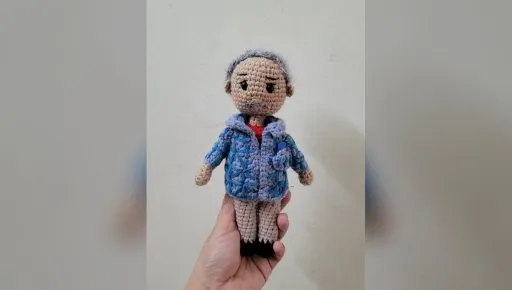
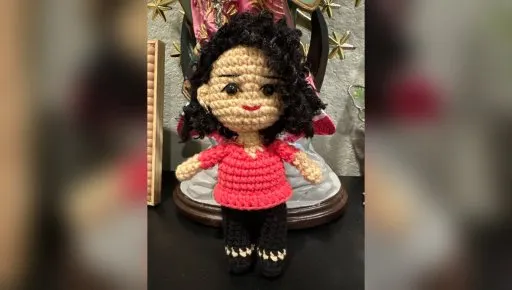
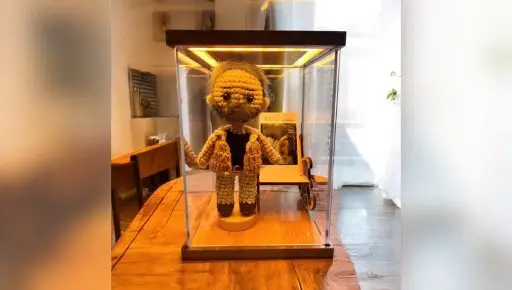
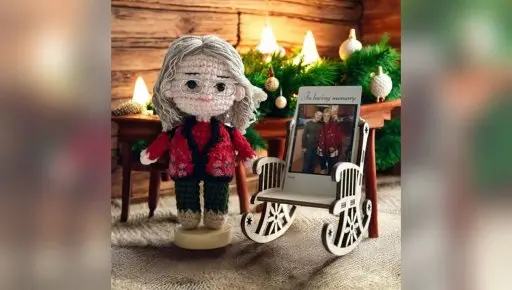
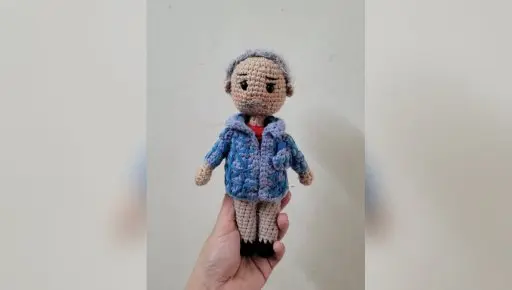
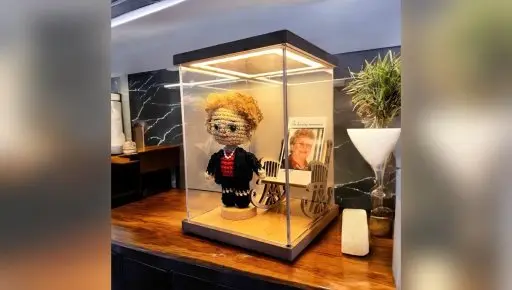
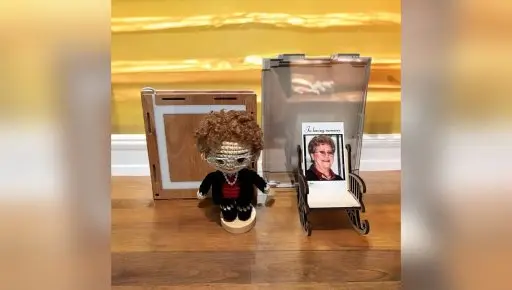
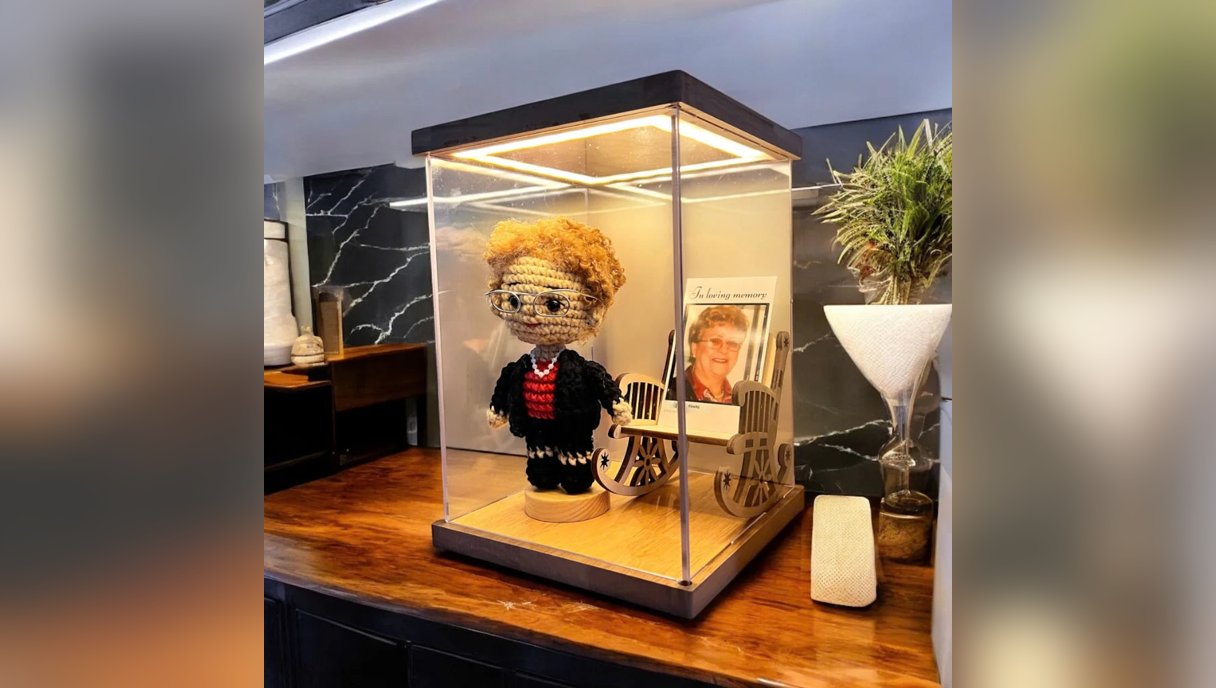
- Likenesses: framed photos, a painted portrait, or a crochet doll made from a photo. They hold their face and the way they looked. They can be copied so each family member has one. If you're curious, here's where portrait dolls of real people came from.
- Places to gather: a memory box, a shadow box or a small memorial corner. They hold many small things together. They let you keep things safe without deciding everything now. A memorial corner can be a shelf with a photo, a candle, one or two objects and a card with their name; some families light the candle on their birthday or the anniversary and say their name out loud, and lighting it becomes the keepsake. A memory box suits the small things that don't need to be out, like ticket stubs, hospital bracelets, letters or a lock of hair. Keep the box somewhere dry and out of the sun, not in a damp basement, so paper and fabric don't yellow or turn musty.
- Living reminders: a tree, a rose bush, or their houseplant that you keep alive. They give you something that grows and changes. They need care, which some people find comforting. A small engraved stone at the foot of the tree, with their name or a line they used to say, makes that spot in the garden theirs.
You don't need one of each. Many people find that a single object, kept in the right place, does more than a full shelf.
A piece of memorial jewelry is often the keepsake people reach for when they want them close without anyone else noticing. If you think you might want a fingerprint ring or pendant one day, it's worth asking for the print now, even if you're not ready to order anything. The print can wait in an envelope for as long as you need.
3. How do you choose a keepsake that feels like them?
To choose a memory keepsake that feels like your loved one, start with what you noticed most about them day to day, then pick the object closest to that. These steps can make it easier:
- Name three things you picture first. Her hands in the garden. His laugh on the phone. The blue sweater. Your keepsake is usually hiding in that list.
- Look for things in their handwriting. A shopping list, a recipe, a note on the fridge. Handwriting is often the keepsake people treasure most later.
- Save their voice while you can. Copy voicemails and short videos to a computer or cloud folder before a phone is replaced.
- Choose one thing to keep near you. Maybe the mug on your desk or the watch by your bed. Everything else can wait in a box.
- Think about who else might want something. A grandchild might want the fishing hat; a sister might want the recipe box. Asking early avoids hurt later. Photos, recipes and videos can be copied for everyone. For an object that can't be split, some families take turns, so the watch lives with one sibling for a year and then the next.
- Give yourself time. Nothing has to be decided this month. Some people sort through a loved one's things in the first weeks, and others leave a room untouched for a year or more; both are normal.
If a keepsake you chose doesn't feel right after a while, you can change it. What comforts you in the first year may be different from what comforts you in the fifth.
If it's your mom you're thinking of, these ideas for a memorial gift for the loss of a mother look at keepsakes of her, like her handwriting or her kitchen, and when each one tends to help.
After a sudden loss, there was no time to plan a goodbye, so the first keepsakes are usually whatever was within reach: the last text message, the jacket still on its hook, the cup from that morning. You're allowed to keep those exactly as they are for now. Something more lasting, like a framed note or a likeness from a photo, can come later, when choosing feels possible.
4. How can you make a keepsake from things you already have?
You can make a meaningful keepsake from things already in the house, with very little skill and no special tools. Often the most treasured keepsakes are simple ones made by family in an afternoon.
- Frame a handwritten note. A birthday card, a recipe or a grocery list in their hand. Put the original behind glass and keep a scanned copy safe.
- Make a recipe book. Gather their recipe cards, photocopy them and bind them into a small book for each family member. Add a photo of them in the kitchen.
- Collect their voice. Copy voicemails and videos into one folder and share it with family. Some people play a message on their birthday each year.
- Fill a jar with memories. Ask family and friends to write one memory each on a slip of paper. Read them on the hard days.
- Turn a favorite shirt into something soft. A pillow cover or a small square framed in a shadow box keeps the fabric close.
- Print a photo book. Choose ten or twenty photos you love, not the best ones, the true ones. Add a line under each.
- Start a memorial page online. A simple shared page or album lets friends and family who live far away add their own photos and stories. You may find memories there you had never heard.
Making a keepsake can be part of the comfort. The hours spent sorting photos or copying recipes become their own way of spending time with them. And if it's too much to do now, the same box of things will be there next season. Holidays and anniversaries often bring keepsakes back into the light, and there are gentle ideas for a first Christmas without Mom or a first Christmas without Dad, and for marking a heavenly birthday.
5. What keepsakes help children remember?
Children often remember through things they can hold and carry. A soft keepsake, a photo in a small frame by their bed, or a T-shirt they can sleep in may mean more to them than anything kept on a high shelf.
Let children choose a keepsake for themselves if they want to. A grandson might pick Grandpa's cap. A granddaughter might want the bracelet Grandma always wore. Asking them what they'd like tells them their grief counts too.
For younger children, a keepsake they can hug is often easier than one they can only look at. A pillow made from a grandparent's shirt, a soft toy that sat on Grandma's bed, or a small doll that looks like the person they miss can become a bedtime companion. Older children and teenagers may prefer something they can wear or carry without anyone noticing, like a watch, a keyring or a photo in a phone case. Whatever they choose, it's theirs, and it's allowed to change as they grow.
Some families write a small card to go with each keepsake: who it belonged to, and one memory. Years later, those cards become keepsakes of their own.
6. Questions people often ask
6.1 Is it unhealthy to keep a lot of their things?
Keeping a loved one's things is a normal part of grief. It can help to notice how a keepsake makes you feel over time. If an object mostly brings comfort, it's doing its job. If it only brings pain, it's okay to put it away for a while.
6.2 What can you do with their clothes?
Clothes can be kept as they are, shared with family, or made into something new like a pillow, a quilt or a memory bear. Here's a guide to memorial gifts made from clothes.
6.3 How do you keep handwriting from fading?
Scan or photograph handwritten notes and recipes, and keep the original out of direct sunlight in a folder or frame with UV-protective glass. A copy can be framed for daily view while the original stays safe.
6.4 What is a memorial doll?
A memorial doll is a doll made to look like someone you've lost, usually from their photos. Here's more on what a memorial doll is and how to choose one.
If a likeness keepsake feels right for you, Crochi makes handmade crochet dolls from your photo, like a crochet doll of the person you miss, with a small photo card printed with the words you choose. Each one is 6, 8 or 10 inches tall and takes about 10 to 13 days to make by hand, plus a day or two for you to check the preview. The card prints up to 80 characters of the words you type, like their name and their years. When the doll is finished, we email you a photo of it before it ships, and if something isn't quite right, we'll change it once for free. If you're not ready for a reminder yet, the photos will wait.
Whatever you keep, and however long you keep it, it's a way of saying they mattered. Take good care.