Portrait Dolls: From 1930s Look-Alikes to Crochet Dolls Made From Your Photo
 By Pham PhamNovember 08, 2026
Table of contents
A doll made to look like a real person sounds like a new idea, something only phone cameras made possible. It's closer to a hundred years old, and the way the first portrait dolls captured a face still explains how they work today.
Portrait dolls are dolls made to look like one real person, through their hair, face shape, skin tone and clothing. The idea goes back to the 1930s, when artist Dewees Cochran made portrait dolls of real children. Today most portrait dolls are made from photos, in cloth, clay or crochet, for family, couples, or in memory of someone.
1. What is a portrait doll?
A portrait doll is a doll made to resemble a specific person rather than a general type, like "a girl" or "a grandma." The maker studies that person's photos and copies the features people recognize first: hair, glasses, skin tone and the clothes they wore most.
Collectors use the phrase in a second way, too. In 1945 and 1946, the Alexander Doll Company sold a "Portrait" series of seven 21-inch composition dolls with names like Melanie, Lady Windermere and Godey, dressed to look like figures from paintings, books and fashion plates. Doll Kingdom's notes on the series list each one. Those dolls are portraits of characters, not of real people.
There's a third meaning you'll see all over shopping results: collectible portrait dolls made in large numbers. These are vinyl or porcelain dolls modeled on a famous face, like a royal bride, a film star or a character from a classic movie, sold in numbered editions with a stand or a certificate. They're portraits of public figures, made for collectors, and every buyer gets the same doll.
So when you search for portrait dolls, you'll find all three: vintage character dolls, collectible dolls of famous people, and handmade dolls made to look like someone you know. This guide is mostly about the last kind.
2. Where did portrait dolls of real people come from?
Portrait dolls of real people became popular in the United States in the 1930s through the work of Dewees Cochran, an artist who started making portrait dolls of real children around 1934. According to Doll Reference's history of her work, the early commissions were popular with wealthy families.
What she did next is the interesting part. In 1936, Cochran created her Look-Alike dolls: six basic dolls, each with a different face shape. By changing the hair and eyes on one of those six faces, she could make a portrait of most children. In other words, she found that a likeness doesn't come from copying every detail. It comes from getting a few of the right ones.
The idea traveled fast. Also in 1936, the Effanbee doll company signed Cochran to a three-year contract, and about 50,000 of her American Children dolls were made from those face types, each 21 inches tall in composition. On April 3, 1939, the cover of Life magazine showed a little girl holding her Look-Alike doll. These figures come from a profile of Cochran in Doll Reader (June/July 1995, pages 68 to 72).
Later, starting in 1952, she made Grow-Up dolls that showed the same child at ages 5, 7, 11, 16 and 20, growing from about 12 to 18 inches tall along the way. The same Doll Reader profile dates the series from 1952 to 1958, while Doll Reference's identification list shows a few of the dolls as late as 1960. A family could watch a doll version of a child grow up alongside the real one. Her original portrait dolls still turn up at specialist doll auctions, like this Belinda Bunyan doll at Theriault's.
Almost a century later, the same lesson holds. A portrait doll that looks like someone usually gets the hair, the skin tone, the glasses and one signature piece of clothing right, and keeps the face simple.
3. What are portrait dolls made of today?
Most portrait dolls today are made of cloth, sculpted clay or porcelain, crochet yarn, or fabric with a printed photo face. Each material gives a different kind of likeness and a different feel in the hand. Here is how the four compare on the face, the feel and what each is best for:
- Cloth, sewn by hand: the face is embroidered or painted, often simple. It feels soft, light and huggable. It's best for children, nursery shelves and keepsakes to hold.
- Polymer clay, porcelain or resin: the face is sculpted and painted, the most detailed of the four. It feels hard and fragile. It's best for display cases and adult collectors.
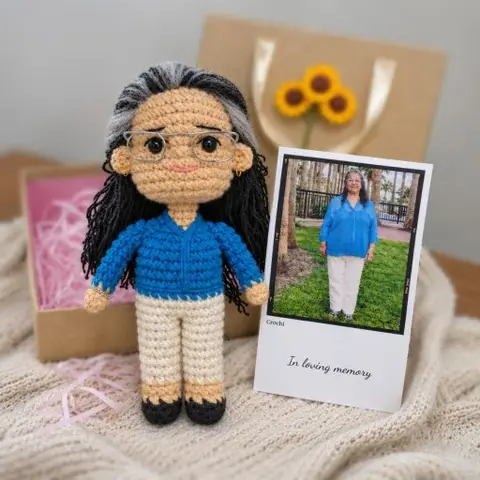
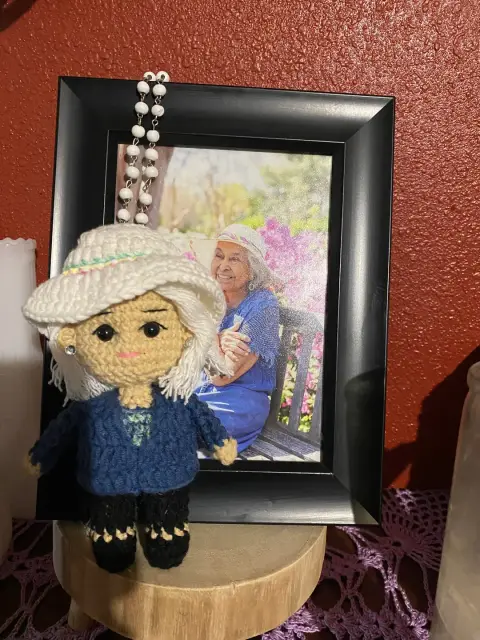
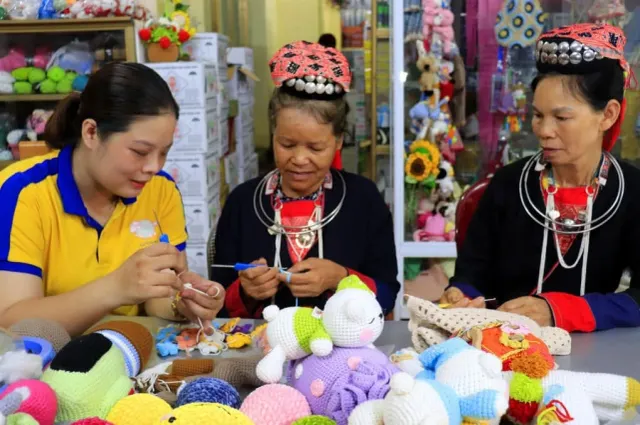
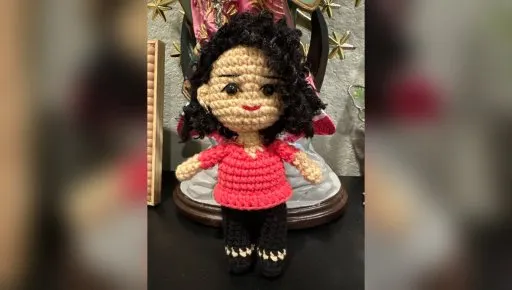
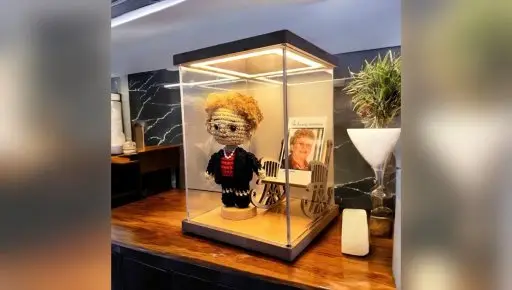
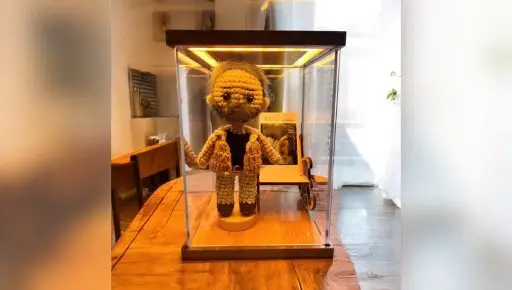
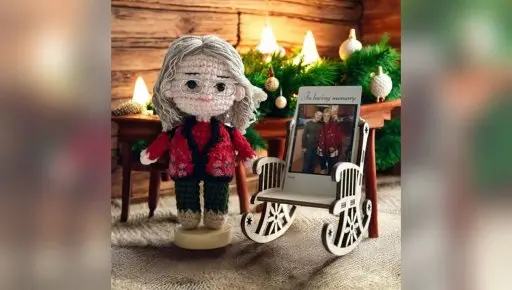
- Crochet yarn: the face has stitched eyes and simple features, and the likeness is carried by hair, glasses, skin tone and outfit. It feels soft, textured and sturdy. It's best for desks, bookshelves, gifts for couples and grandparents, and memorial keepsakes.
- Fabric with a printed photo face: the face is the real photo, printed. It feels soft, but the flat face can look odd from the side. It's best for quick novelty gifts.
No material is better in every way. A sculpted face can look almost real, but it can't be hugged. A crochet portrait doll won't copy every line of a face, but it's warm to hold and it reads as "them" from across a room, which is how most of us recognize the people we love.
3.1 What's the difference between a painted face and an embroidered face?
A painted face shows the most detail, and an embroidered or stitched face is softer and holds up better to handling. A painted face can have lashes, blush and the exact curve of the lips, which helps a large doll look like one particular person up close.
A stitched face keeps to a few features, usually the eyes, the brows and sometimes a small smile, so the likeness has to come from the hair, the skin tone and the clothes. A stitched face also won't chip or rub off, which matters for a doll that will be held, or one that lives in a child's room.
4. Portrait doll sizes and prices, then and now
Portrait dolls have never had one standard size or price. Both depend on the material, on how much of the face is sculpted or painted by hand, and on whether the doll is one of a kind or one of thousands.
4.1 How big is a portrait doll?
Most portrait dolls stand somewhere between 5 and 21 inches tall. The early American portrait dolls were fairly large: Cochran's Look-Alikes were around 14 inches, her Grow-Up dolls went from about 12 to 18 inches as the child "aged," and both the Effanbee American Children and the 1945 Madame Alexander Portrait dolls were 21 inches.
Handmade portrait dolls today cover a wider spread. A sewn cloth doll with a painted face is often 12 to 20 inches, big enough to hold like a real doll. A crochet portrait doll is usually smaller, often 5 to 10 inches, sized for a desk or a bookshelf. If it helps to picture it, a 6-inch doll stands about as tall as a large smartphone, and this crochet doll size guide shows each size next to one.
4.2 How much does a portrait doll cost?
A handmade portrait doll today costs anywhere from under $50 for a small crochet doll to several hundred dollars for a large doll with a hand-painted face. The price mostly follows the hours of handwork, and a painted or sculpted face takes the most hours. Here is how some portrait dolls compare, then and now:
- Dewees Cochran Look-Alike, 1930s: $45 or $65.
- Dewees Cochran Grow-Up, 1950s: $25 to $35.
- Madame Alexander Portrait series, 21 inches, 1945 and 1946: $75 each.
- Sewn cloth doll with a hand-painted face, 12 to 20 inches, today: around $350 to $410 at one doll studio.
- Sculpted clay, porcelain or resin portrait, today: usually quoted piece by piece by the artist.
- Crochet portrait doll, 6 to 10 inches, today: small ones can start under $50.
The historical prices come from Doll Reader (June/July 1995, pages 68 to 72, for the Cochran dolls; March/April 2001, pages 66 to 68, for the Madame Alexander series). The cloth doll range is one studio's published price list, shown only as an example of what a fully painted portrait doll costs.
Those older prices were not small for their time. The Look-Alikes sold for $45 or $65 in the middle of the Great Depression, when a doll at that price was a real splurge for most families.
When you compare portrait doll prices today, look at what's included, not only the number. How many photos will the maker work from? Do you see a preview photo before it ships, and do changes cost extra? Is a card, a stand or a gift box part of the price, or an add-on?
5. How does a crochet portrait doll look like someone?
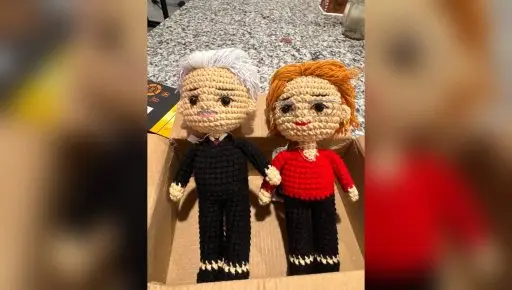
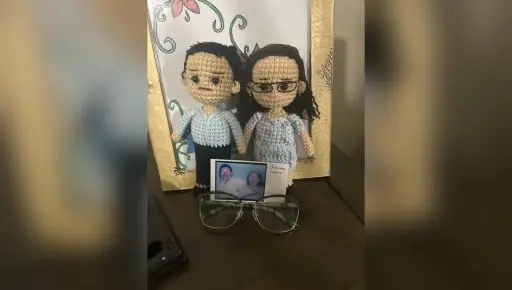
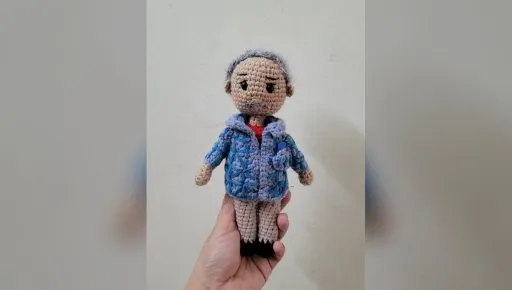
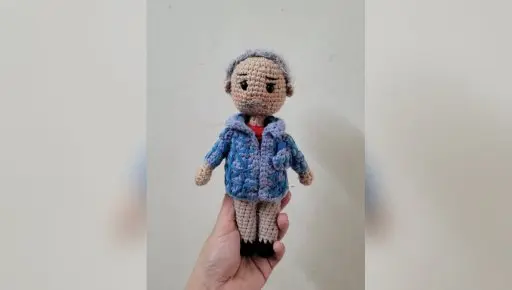
A crochet portrait doll looks like someone through the details you notice first, not through a detailed face. The stitched face stays simple, and the likeness comes from everything around it.
These are the details that do most of the work:
- Hair. Color, length, curls or braids, a part on one side, a bun, a receding hairline, silver at the temples.
- Skin tone. Matched with yarn, in shades like light, tan, almond or brown.
- Glasses. Often the single detail that makes people say "that's Dad."
- A signature outfit. The red flannel shirt, the purple cardigan, the cap he never took off, the scrubs she wore for thirty years.
- Something they held. A coffee mug, a fishing rod, a book, a bouquet of their favorite flowers.
This is the same idea Dewees Cochran worked out with her six face shapes. Get a few features right and the whole doll starts to look like them. Hair is usually the hardest part to get right in yarn, which is why it gets so much attention. Here's a closer look at how crochet doll hairstyles are made, from straight to curly.
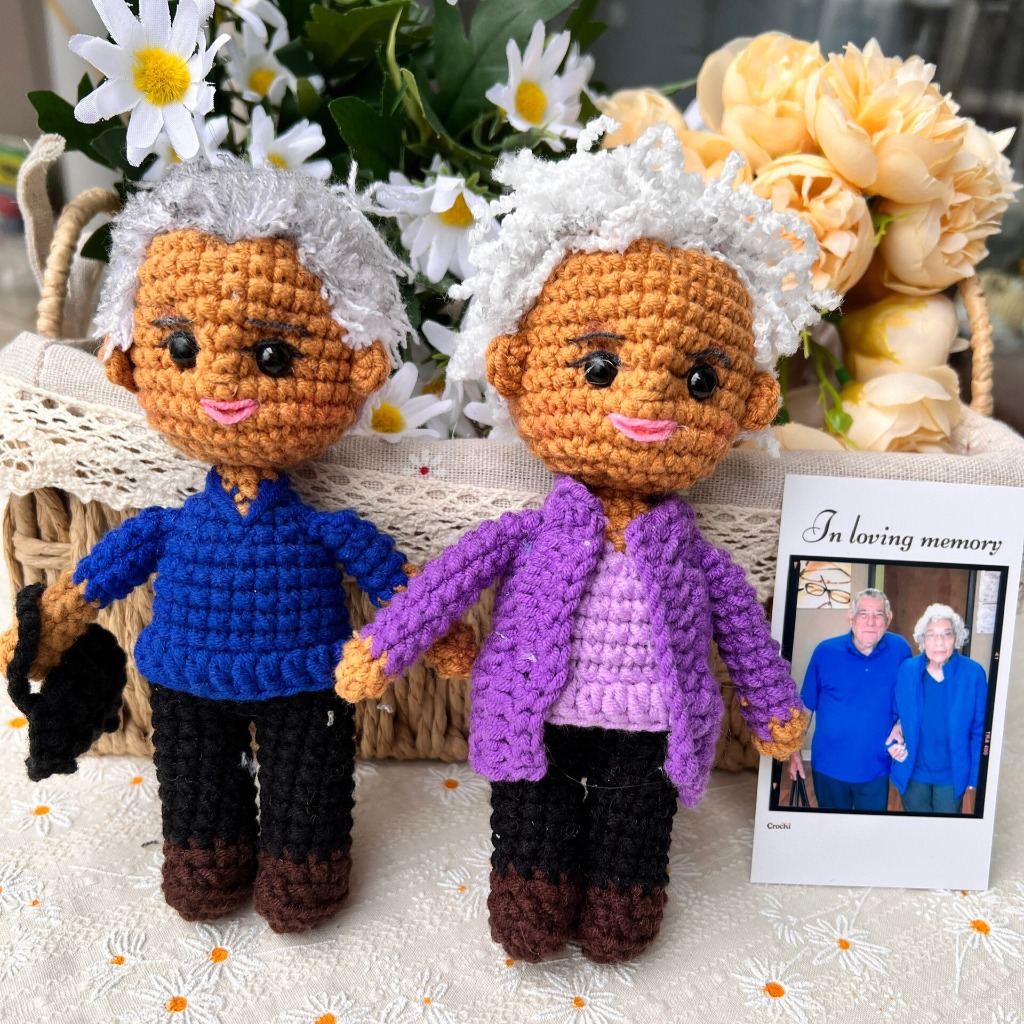
It's worth being honest about what a crochet portrait doll can't do. It won't show wrinkles, freckles or the exact shape of a smile. It's made by hand in yarn, so it will be a little different from the photo. What it can do is look like them the way someone who knew them would remember them. If the portrait is of you, or of you and your partner, here's more on dolls made to look like you.
6. What photos do you need for a portrait doll?
For a portrait doll, one clear full-length photo is usually enough, and two or three photos from different angles make it easier. If all you have is an older photo from the shoulders up, a maker can still work from it with good notes.
- A full-length photo from the front. It shows proportions, the outfit and the shoes.
- A photo from the side or back, if you have one. It helps with long hair, braids, a bun or a ponytail.
- A close photo of the face and hair. Good light matters more than a new photo. A sunny snapshot from 1985 can work better than a dim photo from last year.
- Notes on what the photo can't show. Skin tone, hair color in daylight, which shoes they always wore, a watch or necklace they never took off.
- One sentence about who they are. "She was always in the garden" or "He wore that cap to every ball game" helps the maker choose the right outfit when the photos disagree.
Here's a fuller guide on how to choose a photo for a custom crochet doll, including what to do when you only have one old picture.
7. How do you look after a portrait doll?
To look after a portrait doll, keep it out of strong sun, dust it gently and spot clean it by hand. These four steps are the safest general approach for any handmade yarn doll:
- Keep it out of strong direct sun. Sunlight can fade yarn colors over time, especially reds and dark shades.
- Dust it gently. A soft brush, a lint roller held lightly, or a hair dryer on the cool setting from a distance lifts dust without pulling stitches.
- Spot clean only. If it gets a mark, dab it with a damp cloth and a drop of mild soap, then let it dry lying flat. Don't put a portrait doll in the washing machine.
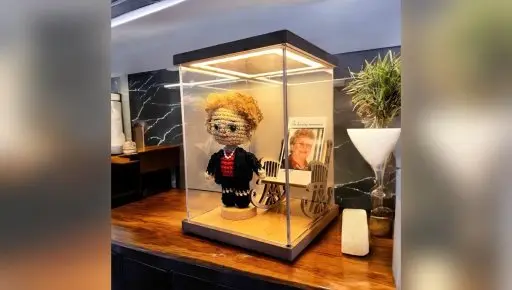
- Use a stand or a case for display. A small wooden base keeps a doll upright, and a clear display box keeps dust off entirely.
Treated this way, a crochet portrait doll can stay on the same shelf for many years, which is the whole point of having one.
8. Questions people often ask
8.1 How long does it take to make a portrait doll?
It depends on the material and the maker. Handmade cloth and crochet portrait dolls usually take one to a few weeks to make, and sculpted figures often take longer. Ask about the timeline before you order, and add shipping time if you need it for a date.
8.2 Are the photos you send for a portrait doll kept private?
They should be, and it's fair to ask before you order. A careful maker uses your photos only to make the doll and shares them only with the people who make and ship it. In our shop that's how photos are handled, we don't sell personal information, and you can ask for yours to be deleted by emailing support@crochi.shop.
8.3 Will a portrait doll look exactly like the person, and what if you don't like it?
No handmade portrait doll is an exact copy, and crochet ones keep the face simple on purpose. The goal is that people who know the person recognize them right away. What helps most comes before the doll is made: clear photos and detailed notes about hair color, glasses, clothes and anything the photo can't show. In our shop, every doll also comes with a free preview photo before it ships, and one round of changes is free. If the doll that arrives looks clearly different from the preview you approved, we'll remake it for free, and you don't need to send the first one back. After delivery, most custom makers, ours included, replace or refund a doll that arrives damaged, but don't take it back for a change of mind, since it was made for one person.
8.4 Can a portrait doll include two people or a pet?
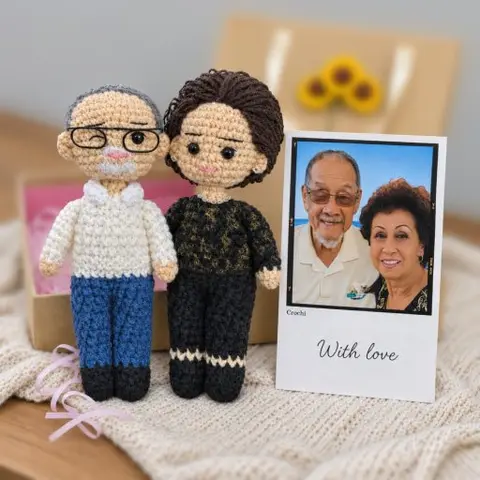
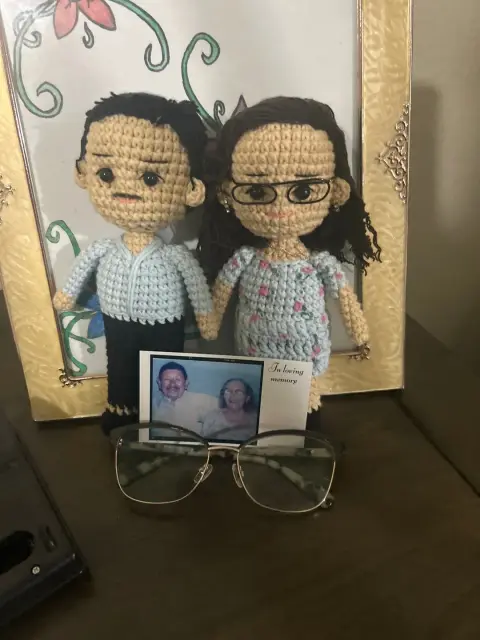
Yes. Couple dolls are one of the most common portrait doll orders, and many makers can add a small pet, a baby or a second figure. Send a photo of each person or animal, even if they come from different pictures.
If you have a reason in mind, these guides go further: a crochet Valentine gift for a couple, a Christmas gift for grandparents, Mother's Day personalized gift ideas, and, in memory of someone, what a memorial doll is and how to choose one or these pet memorial ideas.
If you'd like a portrait doll in crochet, Crochi makes handmade crochet dolls from your photo, as a single doll in 6, 8 or 10 inches from $59, or a couple from $99. You upload a photo, write notes for the artist about skin tone, hair, glasses and clothes, and add a line for a small printed photo card. When your doll is finished, we email you a photo of it before it ships. If something isn't quite right, like the hair, the glasses or the color of a shirt, tell us and we'll change it once for free. The clearer the photo and the notes, the closer the first version comes. Making takes about 10 to 13 days, plus a day or two for you to check the preview, then 7 to 12 days to ship.
Whoever you have in mind, the details you remember are the ones that matter most. Take good care.