Getting Through Your First Thanksgiving Without Mom
 By Pham PhamNovember 10, 2026
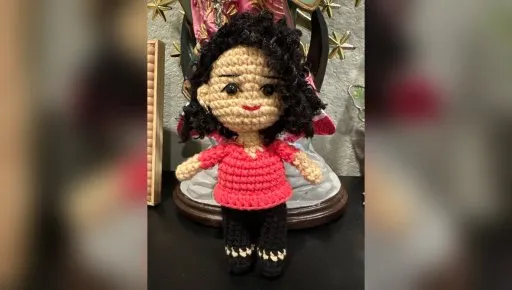
Table of contents
Somebody has to make the gravy this year. For as long as you can remember, that was her job, standing at the stove with the whisk, telling everyone else to get out of her kitchen.
The first Thanksgiving without Mom is often harder than people expect, because so much of the day ran on her recipes, her timing, and her table. Feeling dread in the weeks before is normal. You don't have to host or cook it all. Decide a few things early, make one of her dishes, say her name, and plan a way to step out.
The first Thanksgiving without Mom, and the kitchen she ran
Of course this one is heavy. Thanksgiving is a day built almost entirely out of habits, and a lot of those habits were hers. The turkey moved from the freezer to the fridge on Sunday because she said so. The good tablecloth came out of the same drawer every year. She called the week before to ask who was bringing rolls and whether anyone had a new boyfriend she should set a place for.
So the day keeps finding the places she used to stand. You open her recipe box and there's the stuffing card in her slanted handwriting, with a grease spot right over the word "sage." You reach for the gravy boat and it's the one she bought at a yard sale in 1994. You think, for half a second, that you should call and ask how long the bird goes in. Then you remember.
That moment of reaching for the phone isn't a sign you're falling apart. Years of habit don't stop because she's gone. They just don't have anywhere to land yet.
Plenty of people who write about their first Thanksgiving after losing their mom describe a version of the same scene: crying over a half-frozen turkey in the kitchen sink, not because they can't cook it alone, but because they don't want to. If that's you this year, you're in very good company.
Grief around the holidays also tends to come in waves rather than as one long mood. The National Cancer Institute describes grief bursts, short periods of about 20 to 30 minutes of very intense distress, that are often set off by reminders like holidays. Knowing that can help on the day itself. The wave that hits when someone carves the turkey will usually pass, even if it doesn't feel like it will.
What you feel may not be only sadness. If you cared for her through a long illness, there may be relief in there too, and then guilt about the relief. If things between you were complicated, Thanksgiving can stir up anger or regret next to the missing. And the word "thankful," everywhere you look this month, can feel almost cruel. You don't have to feel grateful on schedule. You're allowed to feel exactly what you feel.
Who makes her stuffing this year?
Whoever wants to, from her recipe card, or nobody at all this year, and it helps to settle that well before Thursday. The hardest part of a first Thanksgiving without your mom is often the quiet negotiating in the weeks before: who hosts now that her house isn't the default, who brings what, whether anyone can face doing it the old way.
A short family call or group text in early November is much gentler than finding out at the table that everyone wanted something different. You might ask a few simple things. Where are we going to be? Which of her dishes do we want, and who will make them? Is anyone not up to coming, and is that okay? Who's checking on Dad, or on whoever is spending the holiday alone for the first time?
Her dishes don't all have to come back this year. Some families split her recipes the way you'd split her jewelry, one dish per sibling. Your brother takes the sweet potatoes with the marshmallows on top. Your sister takes the green bean casserole. Somebody brave takes the pie crust. It won't taste exactly like hers, and that's fine. A slightly lumpy gravy made from her card is still her gravy.
Other families let the whole meal change. Some order a turkey dinner and skip the cooking. Some go to a friend's house or a restaurant so nobody has to look at her empty kitchen. Some rent a place somewhere new and keep the day small. A different Thanksgiving this year isn't giving up on her traditions. It's choosing to get through the day, and the old traditions will still be there next year if you want them back.
If your dad or another family member is still living in her house, this may be the first time in decades that the kitchen is quiet on Thanksgiving morning. He may want to host exactly as she did, or he may not be able to walk into that kitchen at all. A gentle "What would make Thursday easier for you?" gives him a way to say so.
And if you'd rather not go anywhere, that's allowed too. Staying home with a plate of takeout and her favorite movie is a real way to spend the day. If you do stay home, it helps to plan it on purpose, with a call to someone you love and something to do in the afternoon, so the day doesn't simply swallow you.
Making a little room for her at the table
You can make room for her on Thanksgiving without turning the day into a memorial service. Most families find that one or two small things are enough. Here are a few that tend to work, and you only need the ones that feel right:
- Make one of her dishes exactly the way she did, from her card, including the step everyone always teased her about.
- Put something of hers on the table: her serving dish, her gravy boat, her salt and pepper shakers shaped like pilgrims, or one framed photo of her laughing.
- Decide ahead of time what happens with her chair. Leave it empty with a candle at her place, or ask a grandchild to sit there so it isn't a silent gap.
- Add her to the gratitude round. Before the meal, everyone can share one thing they're thankful for about her, even if it's only "she always made too much food."
- Send people home with leftovers in containers the way she did, so the end of the day still feels like her.
None of these has to be done perfectly. If someone cries while setting down her dish, the dish is still on the table. If her chair stays empty and nobody mentions it, that's okay too. Everyone is thinking about her anyway.
Some people also keep one small thing of hers with them through the day: her apron, her reading glasses in a pocket, the ring she always wore. You don't have to explain it to anyone. It's just there, the way she would have been.
When the table goes quiet
When the room goes quiet, saying her name is usually the kindest thing you can do. Families often go silent at the first Thanksgiving because nobody wants to be the one to make everyone sad. But everyone is already thinking about her. Saying it out loud lets the room breathe.
A few words can open the door: "Mom would have hated how dry this turkey is." "She'd be asking who's still single." "Can we each tell one Mom story before pie?" A toast works too. It doesn't have to be a speech. "To Mom" is a whole toast.
If your family says grace, you might add one line for her, something like "Thank you for the years we had with her, and for the hands that made this meal for so long." If your family doesn't pray, a moment of quiet before the first bite does the same job.
Children may talk about Grandma at the wrong moment, or ask where she is while the potatoes are going around. Let them. Kids usually move between sad and silly in a few minutes, and that's how they carry it. A small job helps them too, like choosing which photo of her goes on the table or drawing her a place card.
And you're allowed to laugh. Someone will remember the year she forgot the turkey in the oven, or the time the pie slid off the counter, and the whole table will crack up. That laughter doesn't mean you miss her any less. You can miss her and still laugh at her stories. Both belong at the table.
If you need to step away
You can leave the table, or the whole day, whenever you need to, and it helps to plan how before you arrive. A simple exit plan takes the panic out of the hard moments. Drive yourself so you can leave when you want. Tell one person, a sibling or a friend, that you might step outside, so nobody comes looking for you. Agree on a small signal if you need rescuing from a conversation.
Many people find a short walk after dinner helps more than sitting through the football game. Five minutes of cold air, or a few minutes in the car, can be enough to come back in. Others simply leave after pie. Leaving early isn't rude. It's taking care of yourself on a hard day.
It also helps to know that the days before Thanksgiving are often worse than Thanksgiving itself. VITAS Healthcare, a national hospice provider, notes in its guidance on grief during the holidays that the empty chair at the Thanksgiving table can bring grief to the surface, and that many families need to build new rituals for these days. The dread of the whole week can be heavier than the meal. If you get through Thursday in pieces, that still counts as getting through it.
If people say things that sting, like "she wouldn't want you to be sad" or "at least she's not suffering anymore," try to let it pass. Most of them are reaching for something kind and grabbing the first words they find. You don't owe anyone a brave face this year.
After the dishes are done
The quiet that comes after Thanksgiving can be its own kind of hard. Everyone drives home, the leftovers go in the fridge, and the house goes still. The next morning, the ads for Christmas are everywhere, and it can feel like the whole season is coming at you at once. You don't have to plan December tonight. If it helps to read ahead, there's a gentle letter about the first Christmas without Mom for when you're ready.
Her recipe cards, her apron, and her good tablecloth don't need a decision yet either. They can go back in the drawer exactly where she kept them. Some people make copies of her handwritten recipes for each sibling during the long weekend, so everyone has a piece of her kitchen. Others aren't ready to touch the box at all. Both are okay.
If a friend asked how to help you this season and you didn't know what to say, they may find something useful in this guide to gifts for someone who lost a loved one this Christmas. And if you're thinking about something to keep her close later on, these ideas for a memorial gift for the loss of a mother start with the things she left behind: her handwriting, her recipes, her photos.
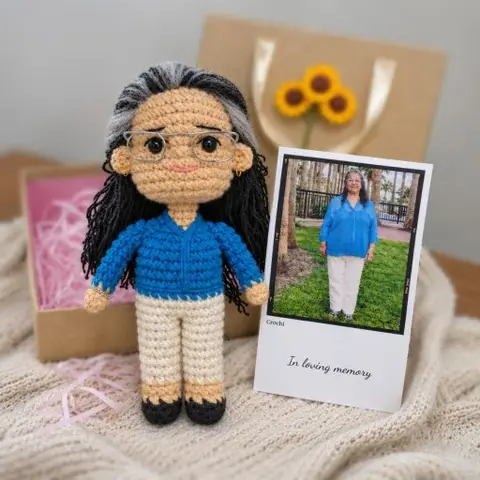
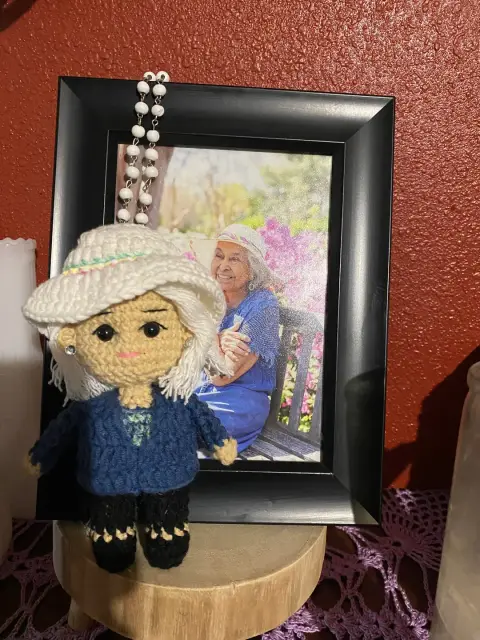
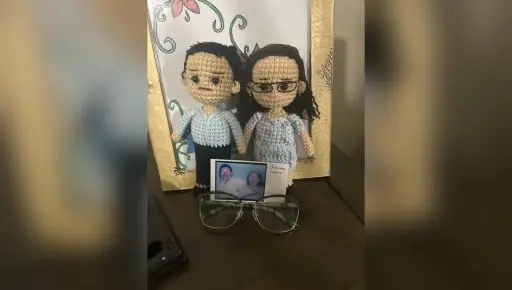
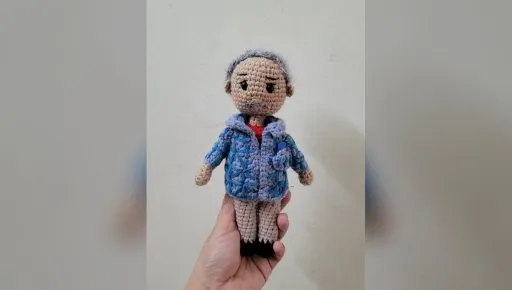
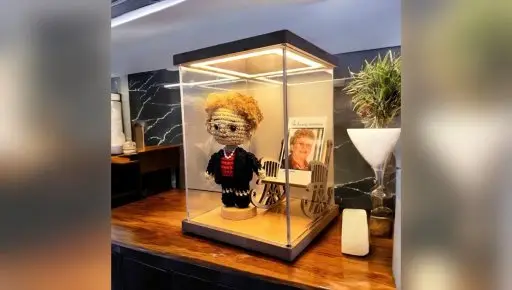
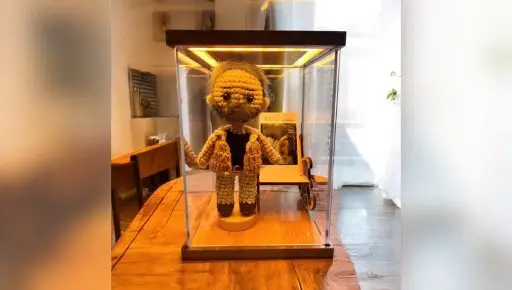
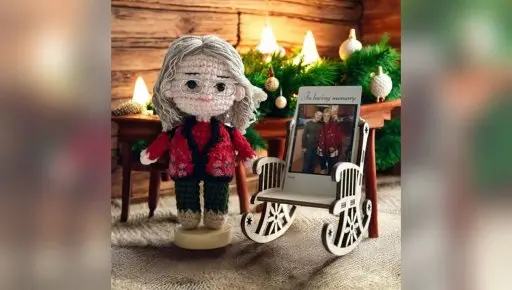
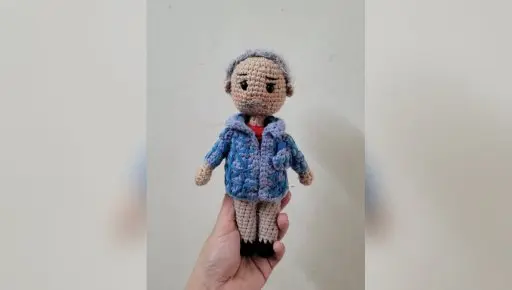
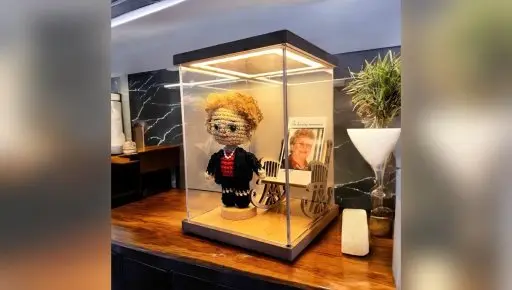
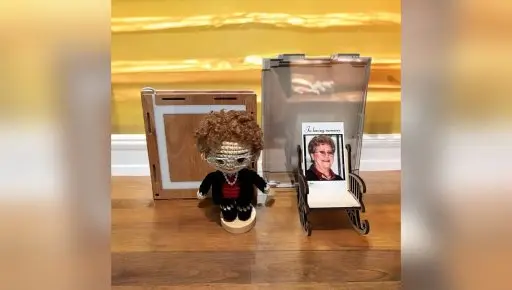
Some people find comfort in something they can hold. Crochi makes handmade crochet dolls from your photo, including a personalized crochet doll made to look like your mom from a favorite picture, in 6, 8 or 10 inches. Each one takes about 10 to 13 days to make, plus a day or two for you to check the preview, before it ships, so it won't arrive by Thanksgiving, and it doesn't need to. When she's finished, we email you a photo of the doll before it ships, and if something isn't quite right, like her glasses or her hair, we'll change it once for free. And if you're not ready for a reminder like that, there's no rush. The photos will wait.
If the grief starts to feel heavier than you can carry, you don't have to carry it alone. A friend, a pastor, a grief support group at a local hospice, or a counselor can all help. Reaching out isn't failing at grief. It's part of getting through it.
However this Thursday goes, with her stuffing or a pizza box, at her table or somewhere new, there's no wrong way to miss her. Missing her is what loving her looks like now.
Take good care.